
Learn
Learn practical safety basics, first-aid essentials, and everyday readiness habits for residents and volunteers.
Volunteer civic preparedness and neighbor-to-neighbor learning
We are a community education effort focused on household readiness, calm observation, and responsible reporting through official channels when concerns need urgent attention.
Start with practical first steps at home, then return for short bulletin-style guidance from our Storyteller voice to keep preparedness habits active over time.
Meet Storyteller (Old Sergeant) Storyteller is CAP’s fictional teaching voice—a composite narrator, not a real officer. The stories stay plain-spoken and practical, helping neighbors build confidence with clear first steps they can use right away.
We share safety education, household preparedness tools, and recurring community guidance; then we direct residents to official emergency and public-safety resources whenever immediate help is needed.
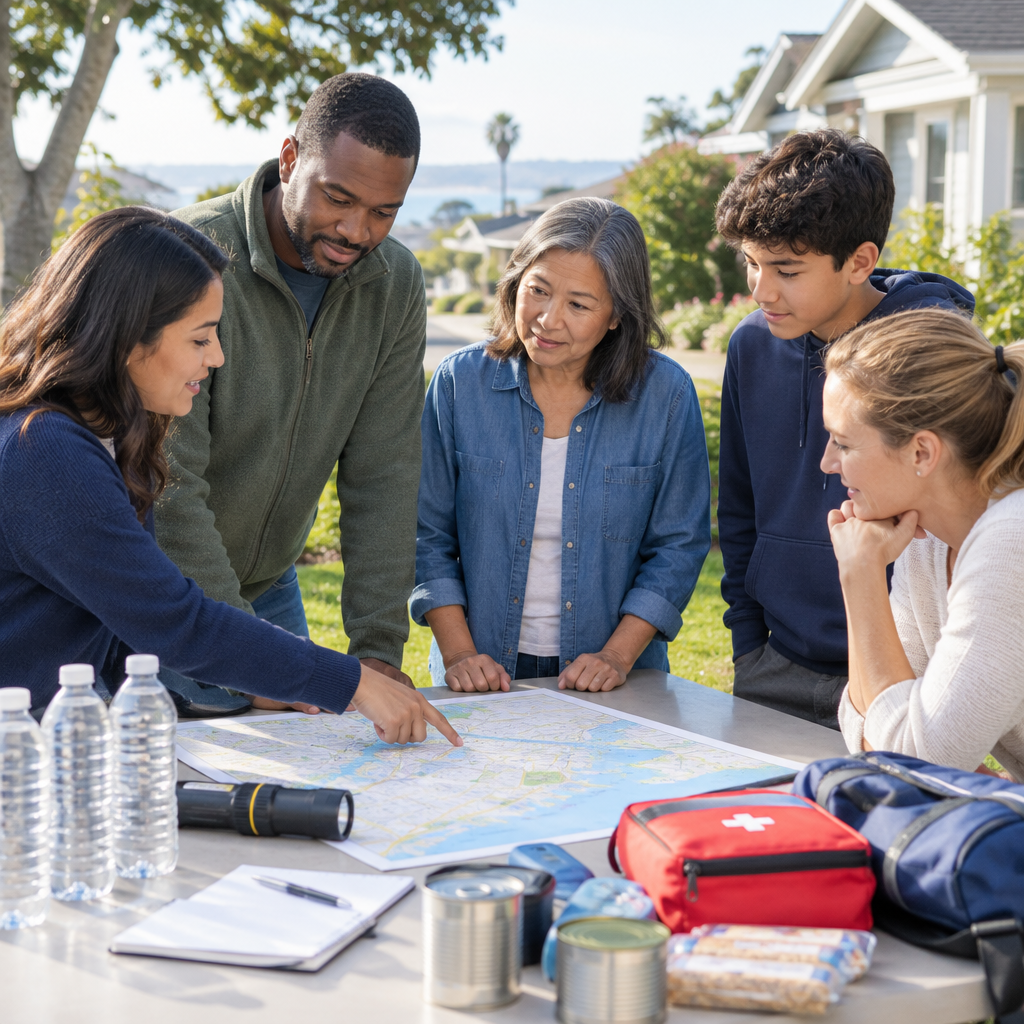
Choose one of three clear paths to build safety skills, prepare your household, and support your community, then return to the Bulletin Board for fresh Storyteller guidance.
Learn practical safety basics, first-aid essentials, and everyday readiness habits for residents and volunteers.
Prepare home and outreach kits, simple checklists, and clear plans your household can use in an emergency.
Get involved through neighborhood outreach, volunteer support, and respectful ways to observe, report, and connect.
Recurring neighborhood guidance from Storyteller
Practical, plain-language posts you can scan quickly, then expand to read full guidance at your own pace.
Emergency Planning
By Storyteller
Labeling key contacts with ICE helps responders identify your family quickly when urgent decisions are needed.
In your mobile phone contact list, add "ICE" (In Case of Emergency) before the names of your key emergency contacts—like "ICE - Spouse" or "ICE - Brother." Paramedics and first responders are trained to look for those letters if they need to identify your family quickly when you can't speak for yourself.
Community Safety
By Storyteller
Calm posture, visible hands, and a soft tone can lower tension and help people feel safe enough to listen.
If you ever encounter an upset or confused person while out on a neighborhood walk, don't raise your voice or stand with your arms crossed. Stand sideways at a comfortable distance, keep your hands visible and relaxed, and speak softly. Ninety-nine percent of tense situations diffuse instantly when met with calm, respectful listening.
Neighborhood Care
By Storyteller
Shared meals build familiarity and trust, helping neighbors support one another before and during emergencies.
Building a resilient neighborhood isn't all serious drills and safety kits. One of the best ways to prepare for a crisis is to hold a summer block party or potluck. When folks share food and know each other by name, they're twice as likely to look out for one another when a real emergency strikes.
Household Preparedness
By Storyteller
Bedside shoes and socks can prevent immediate foot injuries during nighttime quakes or sudden evacuations.
Here's an old sergeant's trick: keep a sturdy pair of work boots or sneakers and a pair of thick socks right under your bed. If an earthquake or explosion shatters windows in the middle of the night, stepping out of bed onto broken glass in bare feet turns you into a casualty immediately. Protect your feet first!
Community Communications
By Storyteller
Written message runners can deliver clear, critical requests when radios and cellular systems both fail.
If radios fail and cellular service is completely down, message runners are the oldest and most reliable communication network in human history. A volunteer on a bicycle or on foot carrying a written note from Neighborhood Block A to Command Post B ensures crucial supply requests get delivered without error or distortion.
Community Support
By Storyteller
Public gratitude and respect for responders strengthens trust and reinforces shared community resilience.
Whenever you see your local police officers, firefighters, or EMTs down at the coffee shop, drop a word of thanks. CAP exists to support community resilience and lighten the load on our first responders, not replace them. We honor their daily sacrifice, and we're proud to stand as prepared neighbors behind them.
Volunteer Wellbeing
By Storyteller
Unpaid service reflects real commitment to neighbors and keeps the civic spirit of community action alive.
At the end of the day, nobody pays a CAP volunteer a single dime for checking storm drains, taking first aid classes, or organizing neighborhood trees. And that's precisely what makes it powerful. When you step up simply because it's the right thing to do for your neighbors, you're keeping the true spirit of American community service alive. Keep up the good work, friends!
Household Preparedness
By Storyteller
A small whistle is inexpensive, lasts longer than your voice in an emergency, and belongs in every home kit and kid's backpack.
A small plastic whistle costs about a dollar, but in a building collapse or heavy fog, it’s worth its weight in gold. Your voice will give out after twenty minutes of shouting for help; a whistle can be blown for hours and carries much further. Tuck one into every emergency kit and kid's backpack in your house.
Volunteer Discipline
By Storyteller
When sirens sound, staying off the road and out of the way can be one of the most useful forms of service.
When sirens start wailing down the road, human nature makes us want to run out and see what's happening. But rubbernecking just clogs up roads and gets in the way of ambulances. A CAP volunteer stays off the roads unless assigned a specific task. Staying home and keeping the streets clear for emergency vehicles is a form of service all by itself.
Home Readiness
By Storyteller
Store emergency water away from sunlight, chemicals, and bare concrete, and rotate it twice a year.
Store your emergency water in a cool, dark place away from direct sunlight and household chemicals. Don't just throw plastic jugs on the concrete garage floor where fumes can leach in over time. Elevate them on wooden pallets or shelves. Rotate your water supply every six months so it’s fresh when you actually need a drink.
Community Communications
By Storyteller
Ham operators become critical when regular communication networks fail during a regional emergency.
In a severe regional disaster, cell networks overload and landlines fail. That’s when the amateur radio operators—the ham nets—shine. These dedicated volunteers can bounce messages across state lines on battery power. You don't need a complex license to appreciate their work, but learning the basics of radio monitoring is a great skill for any neighborhood watch group.
Household Safety
By Storyteller
Make alarm tests and extinguisher checks a first-of-the-month family routine that takes only minutes.
Press the 'Test' button on your smoke detectors on the first day of every month. Make it a family routine: first of the month, test the alarms, check the fire extinguisher pressure gauge, and change out any dying batteries. It takes two minutes and guarantees your first line of defense is always active.
Neighborhood Care
By Storyteller
A brief check-in can help older neighbors stay warm and avoid risky emergency heating methods.
When freezing temperatures hit, space heaters get plugged in, and drafty houses get dangerous fast. If you have elderly folks living on your block, drop by to check that their heat is working properly and that they aren't using dangerous improvised heating methods like open gas ovens. A quick knock on the door keeps folks safe and warm.
Visibility and Safety
By Storyteller
Reflective vests improve safety and clearly signal a calm, helpful presence at dusk or during events.
If you’re out helping direct traffic at a community event or walking the block at dusk, put on a reflective high-visibility vest. Being seen is being safe. Drivers can’t avoid what they can’t see, and a brightly colored vest instantly identifies you as a calm, helpful presence rather than a wanderer in the dark.
Emergency Planning
By Storyteller
Keeping vital records together in a waterproof, fire-resistant bag saves critical time during an evacuation.
Take an hour this weekend to scan or gather paper copies of your deed, insurance policies, passports, birth certificates, and medical records. Seal them inside a waterproof, fire-resistant bag or container. If you ever have ten minutes to evacuate your home, grabbing that single bag saves you months of administrative nightmares down the road.
Volunteer Wellbeing
By Storyteller
Sustainable service depends on pacing yourself, resting, and sharing the load with others.
When folks get excited about community service, they sometimes try to do everything at once—working late shifts, running classes, and taking on every task. But pace yourself, friend. Community resilience is a marathon, not a sprint. Take care of your family, rest when you need to, and let your fellow volunteers carry the load with you.
Observation Skills
By Storyteller
A measured pace and periodic pauses reveal details that hurried patrols often miss.
When walking a neighborhood safety check, don't rush. Walk at a measured pace. Stop periodically under a streetlamp, pause, look around 360 degrees, and just listen. You’ll hear things—a running water pipe, an unsecured gate latching in the wind, a dog bark—that you’d miss completely if you were hurrying along glued to your phone screen.
Storm Safety
By Storyteller
Treat every downed line as live, keep well back, and call emergency services and the utility immediately.
If a storm knocks a power line down onto the street or across a fence, treat it as live and lethal—always. Stay at least 30 feet back, keep neighbors away, and call 911 and the power company immediately. Never attempt to move a wire yourself with wood, plastic, or anything else. Safety first, heroics never.
Technical Preview
This section shows a future direction only: authenticated CAP members will be able to submit bulletin updates over HTTPS, then wait for moderation review before publishing. It is a static stub today and does not accept live posts.
Live posting is not enabled yet.
Status: preview architecture only · no active endpoint